


What is the Tensile Strength of Round Aluminum Foil Lids?
As a supplier of Round Aluminum Foil Lids, I often encounter inquiries about various properties of our products, and one question that frequently comes up is about the tensile strength of these lids. Tensile strength is a crucial mechanical property that determines how well a material can withstand pulling or stretching forces without breaking. In this blog, I'll delve into the concept of tensile strength in relation to round aluminum foil lids, its significance, and the factors that influence it.
Understanding Tensile Strength
Tensile strength is defined as the maximum stress that a material can withstand while being stretched or pulled before it breaks or fractures. It is typically measured in units of force per unit area, such as pounds per square inch (psi) or megapascals (MPa). To determine the tensile strength of round aluminum foil lids, a sample of the lid material is subjected to a controlled pulling force in a testing machine until it fails. The maximum force applied during this test, divided by the original cross - sectional area of the sample, gives us the tensile strength.
For round aluminum foil lids, tensile strength is an important characteristic because it affects the lid's performance in various applications. For example, during the manufacturing process, the lids may be subjected to stretching forces when they are being formed or applied to containers. If the tensile strength is too low, the lids may tear or deform, leading to quality issues. Similarly, in storage and transportation, the lids need to withstand some degree of stress without breaking.

Factors Affecting the Tensile Strength of Round Aluminum Foil Lids
There are several factors that can influence the tensile strength of round aluminum foil lids. The first and most obvious is the composition of the aluminum foil. Different grades of aluminum have different alloying elements and purities, which can significantly affect their mechanical properties. For instance, an aluminum foil with a higher percentage of certain alloying elements like magnesium or manganese may have a higher tensile strength compared to pure aluminum foil.
The thickness of the aluminum foil also plays a crucial role. Generally, thicker foils have higher tensile strengths because they can resist more force per unit area. However, using thicker foils also increases the cost and weight of the lids, so a balance must be struck between the desired tensile strength and other practical considerations.
The manufacturing process can also impact the tensile strength. For example, if the aluminum foil is rolled under high pressure during production, it can have a more uniform grain structure, which often results in higher tensile strength. Additionally, any heat treatment processes applied during manufacturing can also modify the mechanical properties of the foil. Annealing, a heat treatment process that involves heating the foil to a specific temperature and then slowly cooling it, can sometimes increase the ductility and reduce the strength, while quenching and tempering can have the opposite effect.
Surface finishes and coatings on the round aluminum foil lids can also affect tensile strength. Some coatings may add an extra layer of protection and increase the overall strength of the lid, while others may interact with the aluminum foil in ways that could potentially reduce its strength. For example, certain adhesive coatings used to seal the lids to containers need to be carefully selected to ensure that they do not compromise the integrity of the foil.
Importance of Tensile Strength in Different Applications
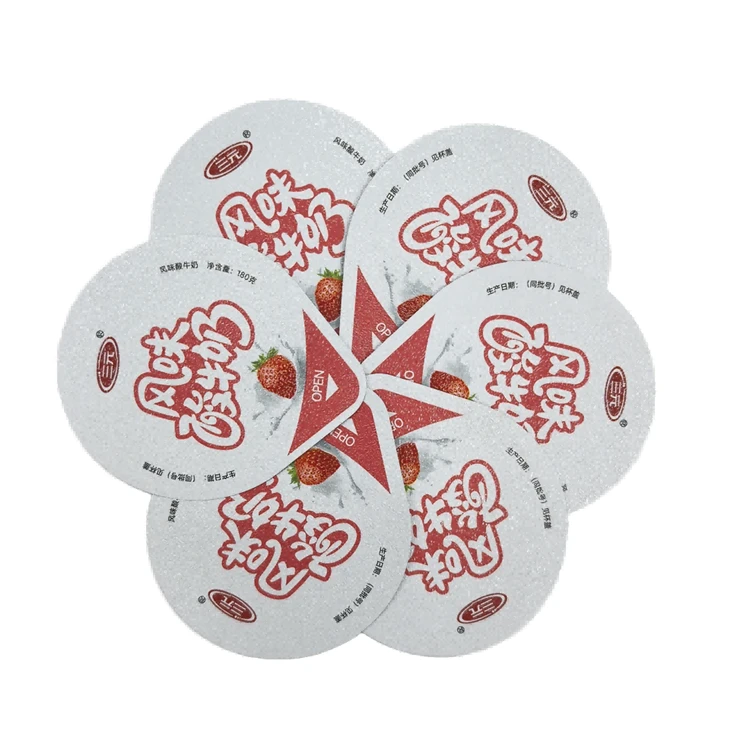
In the food and beverage industry, round aluminum foil lids are widely used for sealing containers of various products such as yogurt, milk, and juice. The tensile strength of these lids is critical to ensure that they can maintain a proper seal during handling, storage, and transportation. If the lid tears or fails due to inadequate tensile strength, it can lead to spoilage of the product, which is not only a waste of resources but can also pose a health risk to consumers.
In the pharmaceutical industry, round aluminum foil lids are used to seal medicine containers. Here, the tensile strength is even more important because the integrity of the seal must be maintained to protect the medication from contamination, moisture, and air. A weak lid may allow contaminants to enter the container, potentially affecting the efficacy and safety of the medicine.
In the cosmetic and personal care industry, round aluminum foil lids are used for products like creams, lotions, and gels. The lids need to be strong enough to withstand normal handling and prevent leakage. A lid with low tensile strength may break during opening or closing, leading to a poor user experience and potential product waste.
Our Offerings and Their Tensile Strength
At our company, we understand the importance of tensile strength in the performance of round aluminum foil lids. We offer a wide range of products with different levels of tensile strength to meet the diverse needs of our customers. Our lids are made from high - quality aluminum foil that is carefully selected and processed to ensure optimal mechanical properties.
We use advanced manufacturing techniques to control the composition, thickness, and grain structure of the aluminum foil, resulting in lids with consistent and reliable tensile strengths. Our quality control team conducts regular tests on the samples of the lids to ensure that they meet or exceed the industry standards.
If you are interested in other types of aluminum foil lids, we also offer Rectangular Aluminum Foil Lid and Multi - diameter Combo Aluminum Foil Lid. These products are also of high quality and have been designed with the appropriate tensile strength for their intended applications. For the best - in - class options, check out our High Quality Aluminum Foil Lid.
Contact Us for Your Aluminum Foil Lid Needs
If you are looking for round aluminum foil lids with the right tensile strength for your specific application, we are here to help. Whether you are in the food, pharmaceutical, or cosmetic industry, our team of experts can work with you to understand your requirements and recommend the most suitable products.
We are committed to providing high - quality products and excellent customer service. Contact us today to start a discussion about your purchasing needs. We look forward to partnering with you to meet your aluminum foil lid requirements.
References
- ASM Handbook Committee, "Properties of Aluminum and Aluminum Alloys", ASM International, 1990.
- Vander Voort, G.F., "Metallography: Principles and Practice", McGraw - Hill, 2004.
- Harris, J.E., "Aluminum Foil Technology and Applications", CRC Press, 2018.


