


The shelf life of an aluminum foil round box is a crucial aspect that both consumers and suppliers need to understand. As a supplier of Aluminum Foil Round Boxes, I've delved deep into this topic to provide you with comprehensive insights.
Understanding the Basics of Aluminum Foil Round Boxes
Aluminum foil round boxes are widely used in the food industry for packaging various products such as baked goods, ready - to - eat meals, and even some types of frozen foods. Their popularity stems from several advantages. Aluminum is a lightweight yet strong material. It provides excellent barrier properties against moisture, oxygen, light, and microorganisms. These properties are essential for maintaining the quality and safety of the food inside the box.
The structure of an aluminum foil round box is typically composed of multiple layers. The inner layer is in direct contact with the food and is usually made of food - grade aluminum foil, which is non - toxic and safe for food storage. The outer layer may have a coating or a printed design for branding and protection.
Factors Affecting the Shelf Life of Aluminum Foil Round Boxes
1. Material Quality
The quality of the aluminum foil used in the box is a primary determinant of its shelf life. High - quality aluminum foil has fewer impurities and a more uniform thickness. This ensures better barrier properties and resistance to corrosion. Lower - quality foil may have microscopic holes or uneven surfaces, which can allow moisture and oxygen to penetrate, thereby reducing the shelf life of the box and the food it contains.
2. Storage Conditions
The environment in which the aluminum foil round boxes are stored plays a significant role. If stored in a dry, cool place away from direct sunlight and high humidity, the boxes can maintain their integrity for a longer time. High humidity can cause the aluminum to oxidize, leading to the formation of rust or corrosion. Exposure to sunlight can also cause the outer coating or printing on the box to fade and may affect the structural integrity of the foil over time.
3. Food Content
The type of food stored in the aluminum foil round box can also impact its shelf life. Foods with high moisture content, such as stews or soups, may require a box with better moisture - resistant properties. Acidic foods can react with the aluminum over time, especially if the inner coating of the box is damaged. On the other hand, dry foods like cookies or crackers may have a longer shelf life in an aluminum foil round box as they are less likely to cause corrosion or spoilage.
General Shelf Life Estimates
Under ideal storage conditions (temperature between 10 - 25°C and relative humidity below 60%), an aluminum foil round box can have a shelf life of up to 2 - 3 years when it is empty. This is because the aluminum remains stable and the protective coatings, if any, remain intact.
When the box is filled with food, the shelf life depends on the food's natural shelf life and the protective properties of the box. For example, if the box is used to store dry pasta, which has a long shelf life on its own, the combination of the pasta and the box can last for 1 - 2 years. However, if it's used to store fresh meat, the shelf life may be limited to a few days to a couple of weeks, even with the protection of the aluminum foil box.
Comparing with Other Types of Food Containers
Let's compare the aluminum foil round box with other common food containers, such as plastic and cardboard.
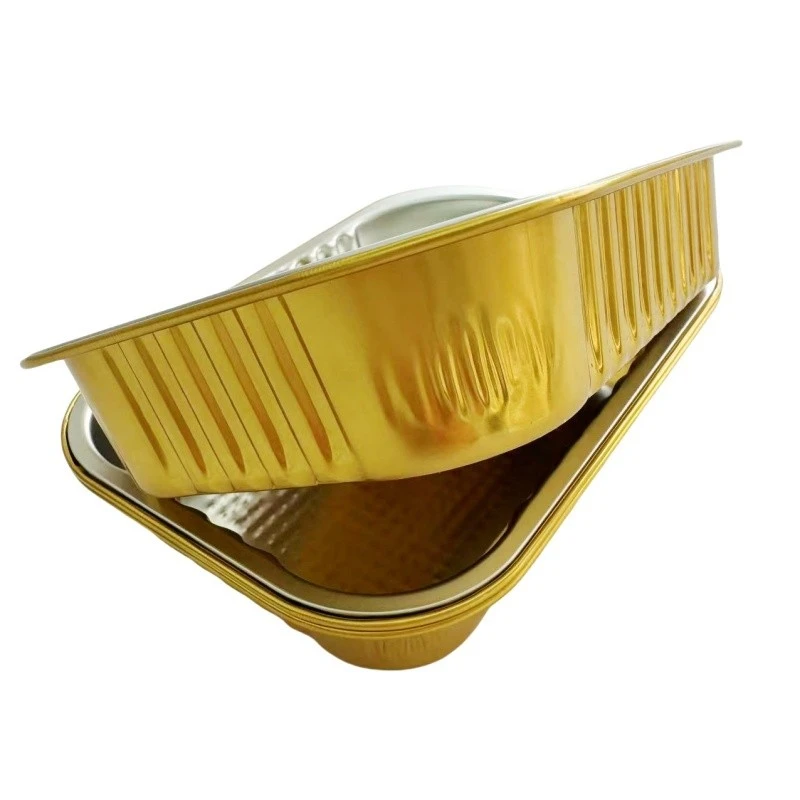

Plastic containers may have a similar or longer shelf life when empty, but they may not provide the same level of protection against oxygen and light. Over time, plastic can also release harmful chemicals, especially when exposed to high temperatures. Cardboard containers are more prone to moisture damage and have limited barrier properties against oxygen and microorganisms. In contrast, aluminum foil round boxes offer a good balance between durability, protection, and environmental friendliness as aluminum is recyclable.
Extending the Shelf Life of Aluminum Foil Round Boxes
As a supplier, I recommend several practices to extend the shelf life of our Aluminum Foil Round Boxes.
First, ensure proper storage at the consumer end. Provide clear instructions on the packaging about the ideal storage conditions. Second, for food manufacturers, use appropriate coatings on the inner layer of the box to enhance its resistance to food - related corrosion. For example, a polymer coating can act as an additional barrier between the food and the aluminum.
The Role of Packaging Design
The design of the aluminum foil round box also affects its shelf life. A well - designed box with a tight - fitting lid can prevent the entry of air and moisture more effectively. Some boxes are designed with special seals or locking mechanisms to enhance their protective properties. Additionally, the shape of the box can influence its stability during storage and transportation, which in turn can affect its shelf life.
Conclusion
In conclusion, the shelf life of an aluminum foil round box is a complex concept that depends on multiple factors. As a supplier, we strive to produce high - quality boxes with excellent barrier properties and durability. By understanding the factors that affect shelf life, both consumers and food manufacturers can make informed decisions about using our Aluminum Foil Round Boxes.
If you are interested in purchasing our Aluminum Foil Round Boxes or have any questions regarding their shelf life and usage, please feel free to reach out for a procurement discussion. We are committed to providing you with the best products and solutions for your packaging needs. You can also explore our other product, the Aluminum Foil Square Box and learn more about our Aluminum Foil Round Box on our website.
References
- "Food Packaging: Principles and Practice" by Yanyun Zhao and Anne - Marie Piergiovanni
- "Aluminum Technology: A Guide to Properties, Processing, and Applications" by ASM International


