


In the food industry, the choice of food containers is crucial, especially when it comes to heat retention. Aluminum foil square boxes have gained significant popularity in recent years, and as a supplier of Aluminum Foil Square Box, I'm often asked about how well these boxes perform in terms of heat retention. In this blog, I'll delve into the scientific aspects of their heat - retention capabilities, comparing them with other alternatives and discussing practical applications.
The Science behind Heat Retention
To understand how aluminum foil square boxes retain heat, we need to first understand the basic principles of heat transfer. There are three main ways heat can be transferred: conduction, convection, and radiation.
Conduction is the transfer of heat through a material or between materials in direct contact. A good conductor allows heat to pass through easily, while an insulator resists heat transfer. Aluminum is a relatively good conductor of heat. However, when it comes to the containers, the thinness of the aluminum foil plays a role. The thin layer of aluminum foil in the square boxes has a limited ability to conduct heat quickly. This is because the rate of heat conduction is proportional to the cross - sectional area and the temperature difference, and inversely proportional to the length of the heat - flow path. The thin foil has a small cross - sectional area for heat to flow through, which slows down the conduction process to some extent.
Convection is the transfer of heat by the movement of fluids (liquids or gases). In the case of an aluminum foil square box, the sealed nature of the box helps reduce convection. The box walls prevent the hot air inside from easily mixing with the cooler air outside. This containment of the hot air inside the box helps to maintain a relatively high temperature for a longer period.
Radiation is the transfer of heat in the form of electromagnetic waves. Aluminum foil has a shiny surface, which is a good reflector of infrared radiation. When food is placed inside the box and starts to emit heat in the form of infrared radiation, the shiny surface of the aluminum foil reflects a significant portion of this radiation back towards the food. This reflection of heat reduces the amount of heat lost through radiation.
Comparative Analysis with Other Container Types
Let's compare aluminum foil square boxes with some other common food containers in terms of heat retention:
Paper Containers
Paper is a poor conductor of heat, but it is also porous. This porosity allows air to pass through easily, leading to heat loss through convection. Additionally, paper is not a good reflector of radiation. In contrast, the sealed structure and reflective surface of aluminum foil square boxes make them much more effective at heat retention.
Plastic Containers
Plastic is a better insulator than aluminum in terms of conduction, but it has some drawbacks. Plastic containers can warp or melt at high temperatures, which is a major concern when dealing with hot food. Also, plastic is not as effective as aluminum in reflecting infrared radiation. Aluminum foil square boxes maintain their integrity at high temperatures and can effectively reflect heat back to the food.
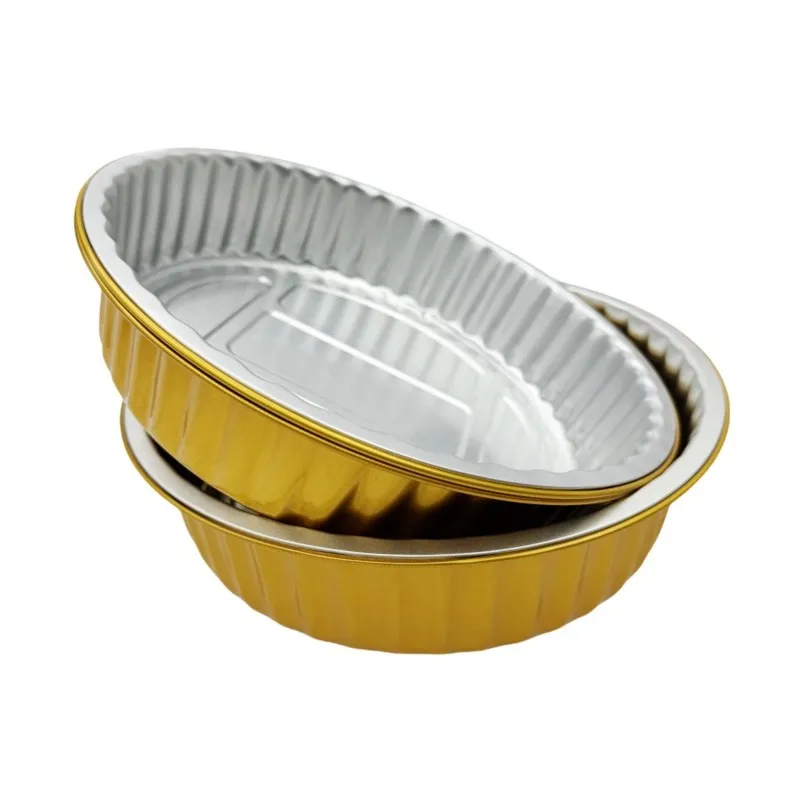
Aluminum Foil Round Box
When comparing with aluminum foil round boxes, the square shape of the boxes has its own advantages in terms of heat retention. The square design allows for more efficient stacking. When boxes are stacked, the outer boxes can act as an additional layer of insulation for the inner boxes, reducing the overall heat loss to the environment. However, round boxes may have a more uniform distribution of heat, but this is often offset by the fact that they cannot be stacked as efficiently as square boxes in a storage or transportation scenario.
Practical Applications and Performance
In real - world scenarios, aluminum foil square boxes perform admirably in heat retention.
Food Delivery
For food delivery services, the ability to keep food hot is essential. Aluminum foil square boxes can keep food at a desirable temperature for an extended period during the delivery time. This ensures that customers receive their meals at a proper temperature, enhancing their dining experience. For example, a pizza delivered in an aluminum foil square box will stay warm and crispy for a longer time compared to when it is delivered in a paper box.
Catering Events
In catering, large quantities of food need to be transported and served at the right temperature. Aluminum foil square boxes can be easily stacked and transported. The heat - retention properties of these boxes mean that the food remains hot and fresh until it is served. Whether it's a corporate lunch or a wedding reception, these boxes can help maintain the quality of the food.
Home Use
At home, these boxes are also very useful. You can use them to store leftovers in the oven or in the microwave. The heat - retention ability of the boxes helps to reheat the food evenly and keep it warm for a while after reheating. This is especially convenient for families with different meal times.
Factors Affecting Heat Retention
While aluminum foil square boxes have good heat - retention capabilities, several factors can affect their performance:

Box Thickness
Thicker aluminum foil generally provides better heat retention. A thicker foil can slow down the rate of heat conduction more effectively. However, it also increases the cost and weight of the box. As a supplier, we offer different thickness options to meet the diverse needs of our customers.
Food Type
The type of food placed in the box also matters. Foods with high water content, such as soups and stews, tend to retain heat better than dry foods like sandwiches. The water in the food acts as a heat reservoir, and the aluminum foil box helps to keep that heat from escaping quickly.
Ambient Temperature
The temperature of the surrounding environment has a significant impact on heat retention. In a cold environment, the box will lose heat more quickly. However, the reflective and insulating properties of the aluminum foil still allow it to perform better than many other container types under such conditions.
Conclusion
In conclusion, aluminum foil square boxes are an excellent choice when it comes to heat retention. Their ability to resist conduction, convection, and radiation heat transfer makes them suitable for a wide range of applications, from food delivery to home use. The square shape offers stacking advantages that enhance their heat - retention performance further. When considering the factors such as box thickness, food type, and ambient temperature, customers can make the most out of these boxes.
If you're in the market for high - quality aluminum foil square boxes with excellent heat - retention capabilities, I encourage you to reach out for a procurement discussion. We can provide tailored solutions based on your specific needs and requirements.
References
- Holman, J. P. (1997). Heat Transfer. McGraw - Hill.
- Incropera, F. P., & DeWitt, D. P. (2002). Fundamentals of Heat and Mass Transfer. Wiley.


