


Hey there! As a supplier of Aluminum Foil Square Box, I've seen firsthand how these nifty containers interact with different types of food. It's pretty fascinating, actually. So, let's dive right in and explore this topic together.
1. The Basics of Aluminum Foil Square Boxes
First off, let's talk a bit about what makes aluminum foil square boxes so great. They're lightweight, yet sturdy enough to hold a good amount of food. They're also disposable, which is a huge plus for busy folks or those hosting events. And let's not forget about their heat - conducting properties. Aluminum foil is an excellent conductor of heat, which means it can heat up or cool down food quickly.
2. Interaction with Baked Goods
Baked goods are one of the most common types of food that go into aluminum foil square boxes. Think about cakes, brownies, and cookies. When you bake these treats in an aluminum foil square box, the box helps distribute the heat evenly. This is because the aluminum conducts heat from the oven to the food all around the box. As a result, your baked goods are more likely to cook evenly, with no over - browned edges or undercooked centers.
For example, when you're making a chocolate cake, the aluminum foil square box will transfer the heat from the oven's heating elements to the batter. The batter will start to cook from the outside in, and the even heat distribution will ensure that the cake rises uniformly and has a nice, golden - brown crust.
Once the baking is done, the box also helps keep the baked goods warm for a while. It acts as a bit of an insulator, trapping the heat inside. And if you need to store the baked goods later, the box can be easily covered with a lid or some plastic wrap, keeping the treats fresh.
3. Interaction with Savory Dishes
Now, let's move on to savory dishes. Things like lasagna, quiches, and casseroles are often baked in aluminum foil square boxes. Similar to baked goods, the heat - conducting property of the box is a big advantage here. When you put a lasagna in the oven in an aluminum foil square box, the box quickly heats up and transfers that heat to the layers of pasta, cheese, and sauce. This helps the flavors meld together as the dish cooks.
The box also provides a convenient way to serve the savory dish. You can take it straight from the oven to the table. And if there are leftovers, you can simply cover the box and pop it in the fridge. The box is resistant to moisture, so it won't get soggy from the juices of the savory dish.
Another great thing about using aluminum foil square boxes for savory dishes is that they can be used in the freezer. If you've made a big batch of casserole and want to save some for later, you can freeze it right in the box. When you're ready to eat it, just take it out of the freezer, let it thaw a bit, and then reheat it in the oven. The box can withstand the low temperatures of the freezer as well as the high temperatures of the oven.
4. Interaction with Cold Foods
Aluminum foil square boxes aren't just for hot foods. They're also great for cold foods. Salads, sandwiches, and fruit cups can all be stored in these boxes. The box provides a barrier against air and light, which can help keep the food fresh for longer.
For salads, the box can prevent the greens from wilting too quickly. It keeps the air out, which slows down the oxidation process that causes the greens to turn brown. And if you're packing a sandwich, the box can protect it from getting squished. You can even stack multiple boxes in a cooler when you're going on a picnic or a road trip.
When it comes to fruit cups, the aluminum foil square box can keep the fruit from getting bruised. It also helps maintain the right level of humidity inside the box, so the fruit doesn't dry out.
5. Comparison with Aluminum Foil Round Box
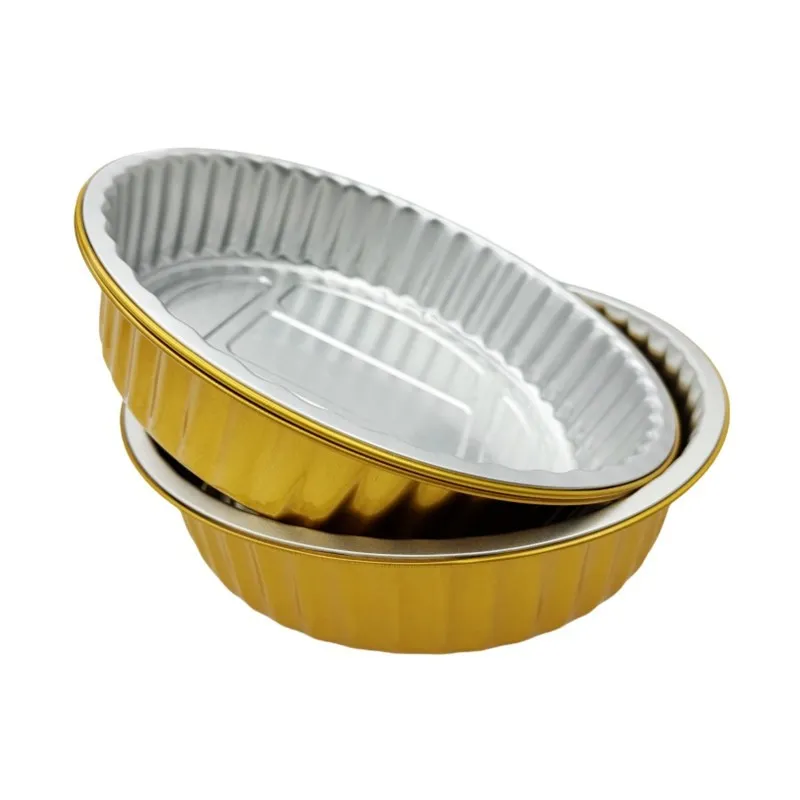
You might be wondering how aluminum foil square boxes compare to Aluminum Foil Round Box. Well, both have their advantages. Round boxes are great for circular or round - shaped foods, like pies or tarts. They can fit these foods perfectly, and the circular shape can sometimes provide a more even heat distribution in certain cases.
However, square boxes have their own perks. They're more stackable, which is great for storage. You can fit more square boxes in a pantry or a fridge compared to round boxes. And when it comes to cutting and serving food, square boxes can be more convenient, especially for rectangular - shaped dishes like lasagna or brownies.
6. Chemical Interactions
It's important to talk about chemical interactions between aluminum foil square boxes and food. In general, aluminum foil is safe to use with most foods. However, there are some acidic foods that can react with the aluminum. Foods like tomatoes, citrus fruits, and vinegar - based dressings have a low pH, which means they're acidic. When these acidic foods come into contact with aluminum foil for a long time, a chemical reaction can occur.
The reaction can cause the aluminum to leach into the food, and it can also change the taste and color of the food. For example, if you store a tomato - based sauce in an aluminum foil square box for too long, the sauce might start to take on a metallic taste, and it could turn a slightly grayish color. To avoid this, it's a good idea to line the box with a layer of parchment paper or plastic wrap when storing acidic foods.
7. Conclusion and Call to Action
In conclusion, aluminum foil square boxes are incredibly versatile. They can interact with different types of food in various ways, whether it's helping with even cooking of baked goods, convenient storage of savory dishes, or keeping cold foods fresh. They have their advantages over round boxes in terms of stackability and serving.
If you're a restaurant owner, an event planner, or just someone who loves to cook and needs reliable food containers, I highly recommend giving our Aluminum Foil Square Box a try. We offer high - quality boxes at competitive prices. If you're interested in purchasing, feel free to reach out for a quote and start a discussion about your specific needs.

References
- "Food Packaging: Principles and Practice" by Yam, K. L., & Lee, L. S.
- "The Science of Cooking" by Peter Barham.


