


As a supplier of rectangular paper bowls, I often encounter questions from customers about the practicality and safety of using these bowls for serving noodles. In this blog post, I'll delve into the details to answer the question: Can rectangular paper bowls be used for serving noodles?
The Suitability of Rectangular Paper Bowls for Noodles
Design and Functionality
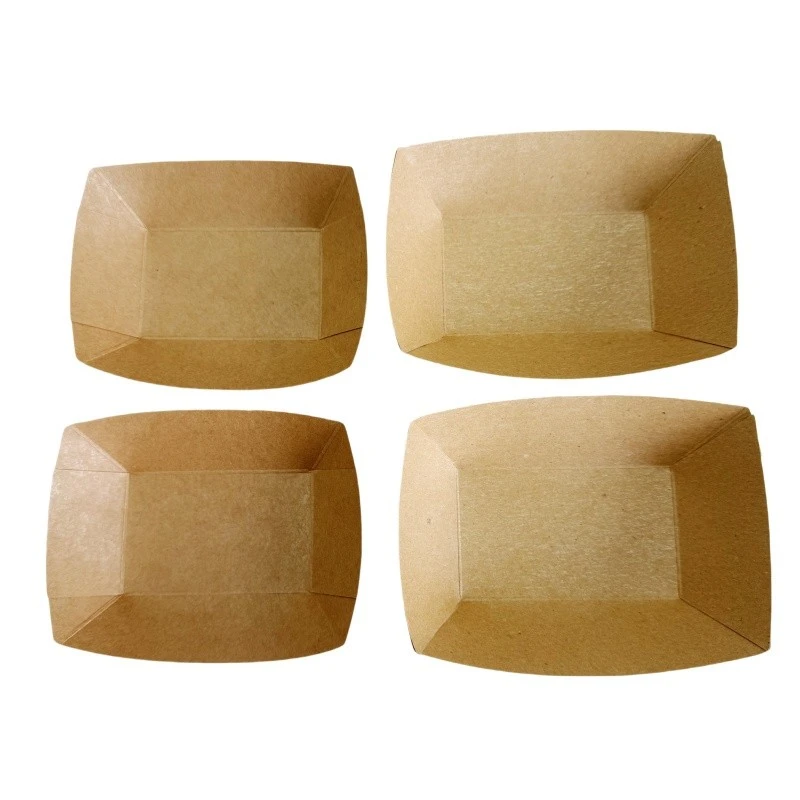
Rectangular paper bowls offer several advantages when it comes to serving noodles. Their unique shape provides a stable base, which is beneficial when the bowl is filled with hot noodles and broth. Unlike circular bowls, the rectangular design allows for a more efficient use of space, both on the dining table and during storage. This is particularly useful in restaurants and food trucks where space is often at a premium.
The flat sides of the rectangular paper bowl also make it easier to stack multiple bowls, reducing the amount of storage space required. This is a significant advantage for businesses that need to stock a large quantity of disposable bowls.

Material and Durability
Modern rectangular paper bowls are typically made from high - quality paper materials that are designed to withstand the rigors of holding hot, liquid - filled noodles. Many are coated with a food - grade wax or polymer to prevent leakage and keep the paper from becoming soggy. This coating not only protects the bowl but also ensures that the food remains safe and hygienic.
The durability of these bowls is further enhanced by their construction. They are often reinforced at the edges and corners, which helps to prevent tearing and maintains the shape of the bowl even when filled with heavy noodles and a generous amount of broth.
Heat Resistance
One of the most important factors when serving noodles is the ability of the bowl to withstand high temperatures. Rectangular paper bowls are engineered to handle the heat of freshly cooked noodles and hot broth. The food - grade coatings used on the bowls act as a barrier, preventing the heat from quickly transferring to the outside of the bowl and making it uncomfortable to hold.
However, it's important to note that while these bowls can handle hot food, they are not designed for use in the microwave or oven. Exposing them to direct heat sources other than the hot food they contain can damage the bowl and potentially release harmful chemicals.
Advantages of Using Rectangular Paper Bowls for Noodles
Environmental Friendliness
In today's environmentally conscious world, many consumers and businesses are looking for sustainable alternatives to traditional disposable food containers. Rectangular paper bowls are an excellent choice as they are often made from recycled paper and are biodegradable. This means that they have a lower impact on the environment compared to plastic or Styrofoam containers.
By choosing to use rectangular paper bowls for serving noodles, restaurants and food vendors can show their commitment to sustainability and attract eco - friendly customers.
Cost - Effectiveness
For businesses, cost is always a major consideration. Rectangular paper bowls are generally more affordable than other types of disposable food containers. They are available in bulk at a relatively low cost, which can help businesses save money on their food service expenses.
In addition, the lightweight nature of paper bowls reduces shipping costs, making them an even more cost - effective option for businesses that need to transport large quantities of containers.
Aesthetic Appeal
Rectangular paper bowls offer a modern and stylish look that can enhance the presentation of noodles. Their unique shape and clean lines can make the food look more appealing, which is important for attracting customers. Many paper bowls also come in a variety of colors and designs, allowing businesses to customize their food service packaging to match their brand identity.
Considerations and Limitations
Insulation
While rectangular paper bowls can handle hot food, they may not provide the same level of insulation as some other types of containers. This means that the noodles and broth may cool down more quickly compared to being served in a ceramic or insulated plastic bowl. However, this can be mitigated by using additional insulation methods, such as placing the paper bowl inside a cardboard sleeve or using a double - walled paper bowl.
Portion Size
The size of rectangular paper bowls can vary, and it's important to choose the right size for the portion of noodles you plan to serve. Some smaller paper bowls may not be suitable for large servings of noodles, while larger bowls may be more appropriate for family - style or sharing portions.
Other Disposable Food Containers in Our Product Line
In addition to rectangular paper bowls, our company also offers a wide range of other disposable food containers. For example, we have Kraft Paper Bags with Handles, which are perfect for taking out noodles or other food items. These bags are made from sturdy kraft paper and feature convenient handles for easy carrying.
We also provide Coated Cardboard Burger Box, which are great for serving burgers and other fast - food items. The coated cardboard ensures that the box remains sturdy and leak - proof, even when filled with juicy burgers and fries.
Another popular product in our line is the Boat Tray. These trays are ideal for serving snacks, appetizers, or even small portions of noodles. Their unique shape adds an interesting touch to the presentation of the food.
Conclusion
In conclusion, rectangular paper bowls can indeed be used for serving noodles. They offer a combination of functionality, durability, and environmental friendliness that makes them a great choice for both businesses and consumers. While they do have some limitations, such as insulation and portion size, these can be easily addressed with proper planning and the use of additional accessories.
If you're interested in purchasing rectangular paper bowls or any of our other disposable food containers, we invite you to contact us for a purchase negotiation. Our team of experts is ready to assist you in finding the right products for your needs.
References
- "Food Packaging Technology", Second Edition, by Owen R. Fennema.
- "Handbook of Food Science, Technology, and Engineering", by Y.H. Hui.


